


Cryptocurrency Fraud,
Cybercrime,
Fraud Management & Cybercrime
Treasury Submissions Advocate for Comprehensive Coverage; Exemptions May Undermine Safeguards

The Australian government’s proposed Scams Prevention Framework has come under scrutiny for its decision to exclude critical entities that facilitate scams, raising concerns about the robustness of consumer protection measures it offers.
The Scams Prevention Framework aims to mitigate scam-related damages by imposing obligatory prevention, detection, and response protocols on financial institutions, telecommunication providers, and leading digital businesses. However, submissions to the Treasury highlight calls for the inclusion of non-bank payment services, cryptocurrency platforms, email services, and Voice over Internet Protocol (VoIP) providers, which are perceived as essential in both initiating and monetizing scams.
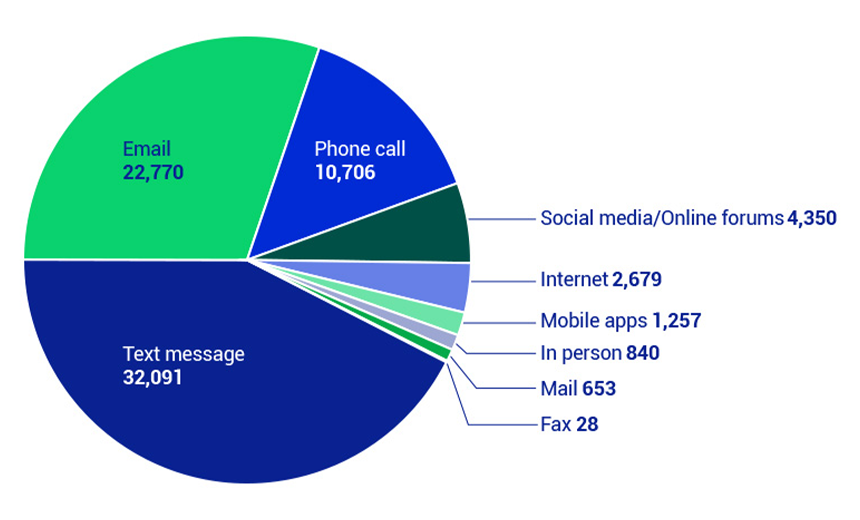
The National Anti-Scam Centre’s Q4 2024 report revealed that email channels are integral entry points utilized by scammers. Notably, while email services serve as a significant vector for fraudulent activity, they remain outside the ambit of the proposed framework.
Moreover, the increasing reliance on VoIP communication is alarming; with 46% of fraudulent calls traced back to VoIP-enabled devices, the potential for scammers to disguise their identities and impersonate legitimate entities is significant. Despite this, VoIP providers also lack coverage under the new regulations, according to several critical responses.
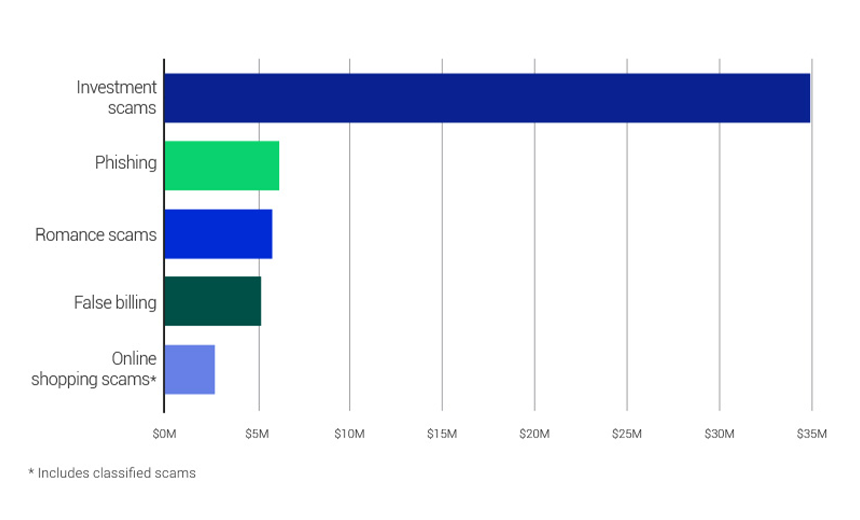
The absence of regulatory measures for cryptocurrency exchanges, notorious for facilitating investment scams in Australia, has drawn particular ire. Reports indicate that investment scams have resulted in a staggering $34.9 million in losses within a three-month span, with 523 individuals affected, as noted by the NASC.
Cryptocurrency transactions accounted for the third-largest share of reported scam losses in the last quarter, with victims citing $10 million in losses attributed to this payment method. This represents 15% of all financial losses reported, emphasizing the need for greater regulatory scrutiny.
Critics further argue that excluding cryptocurrency platforms exposes a significant vulnerability in Australia’s strategies against economically damaging scams. The absence of regulatory frameworks means that victims who lose assets in such transactions may find themselves with limited recourse for recovery.
In addition to these omissions, there is widespread concern regarding the lack of clarity over reimbursement processes across divergent scam scenarios. While the framework does establish responsibilities and liability for receiving banks, uncertainties persist due to its mixed inclusions and exclusions, as noted by Ken Palla, a former director of MUFG Bank.
Palla highlights a specific conundrum: if a scam starts via email, traverses through a non-bank payment service, and culminates at an international bank, determining liability remains ambiguous. He recommends that the Treasury issue a comprehensive outline that elucidates potential recovery outcomes based on various scam scenarios.
Intelligence-Sharing Initiatives Under Consideration
Emerging proposals urge the establishment of an enhanced intelligence-sharing framework aimed at intercepting scam proceeds before they can be transferred through multiple accounts, a tactic often employed to launder illicit gains. One such recommendation would mandate banks to disclose information related to confirmed mule accounts from the framework’s initiation.
Palla further suggests that banks, whether sending or receiving, should face stricter consequences if they are informed of mule activity yet choose not to take appropriate action. The overarching aim is to disrupt the operations of scam networks by preventing the rapid transfer of stolen funds, a prevalent tactic used to obfuscate trails and launder proceeds.