


Artificial Intelligence & Machine Learning,
Next-Generation Technologies & Secure Development
CEO Jensen Huang Unveils Alpamayo Models and Rubin Platform
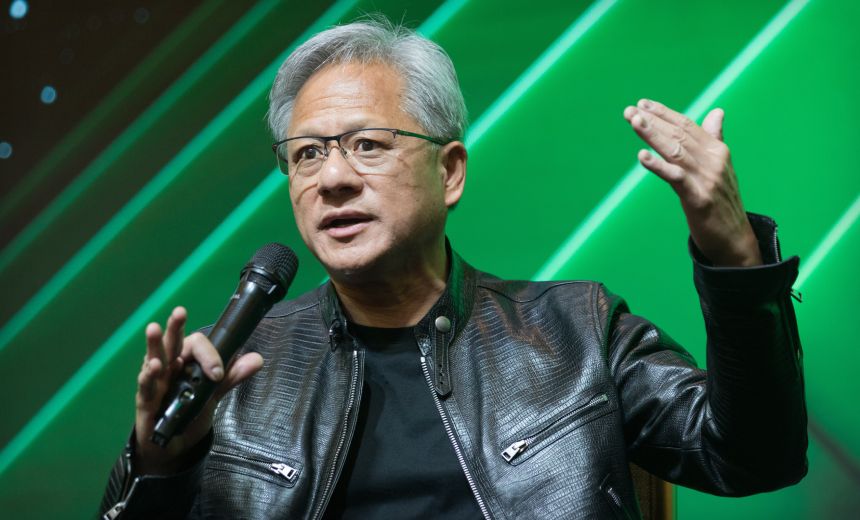
Nvidia, a leader in artificial intelligence technology, aims to enhance the decision-making capabilities of autonomous vehicles with its new offerings. At the CES 2026 trade show, CEO Jensen Huang introduced the Alpamayo model family, designed for autonomous vehicle development, alongside the Rubin platform, marking a significant leap in AI-driven technology.
The Alpamayo initiative addresses challenges faced by autonomous vehicles, particularly in high-pressure environments like intersections with malfunctioning traffic signals. Unlike conventional systems that merely react, Alpamayo aims to enable vehicles to process scenarios critically, making informed decisions.
Huang described the moment as pivotal for robotics, stating that advancements in physical AI—systems that can comprehend and strategize—are opening new avenues for practical applications, including robotaxis. “The ChatGPT moment for robotics is here,” he asserted, indicating a transformative shift in how AI will be integrated into everyday technology.
At the heart of the Alpamayo lineup is Alpamayo R1, which Nvidia touts as the first open reasoning vision-language action model for autonomous driving. This model not only processes data from sensors but also evaluates potential actions, determining the safest choice. The ten-billion-parameter model is crafted to navigate complex situations, a capability essential for the safe operation of autonomous vehicles.
Nvidia’s vice president of automotive, Ali Kani, highlighted the model’s ability to break down problems and systematically evaluate scenarios for optimal outcomes. Alongside Alpamayo, the portfolio includes AlpaSim, a simulation framework supported by a comprehensive dataset exceeding 1,700 hours of driving data, aimed at refining development processes for autonomous technology.
Mercedes-Benz has announced plans to be the first automotive manufacturer to integrate Alpamayo into commercial vehicles. The upcoming Mercedes-Benz CLA will incorporate AI-driven functionalities built on Nvidia’s Drive platform, expected to launch in the U.S. later this year. CEO Ola Kallenius emphasized a cautious approach, illustrating the potential hazards of deploying such technology prematurely.
Huang also disclosed the Rubin platform, which pairs next-generation GPUs with innovative CPUs and advanced networking for expedited AI inference at scale, aiming for a significant reduction in operational costs. This move indicates Nvidia’s commitment to pioneering in an AI landscape where faster computing translates into more efficient advancements.
The introduction of AI-native storage through Nvidia’s Inference Context Memory Storage Platform promises to enhance inference capabilities, particularly as organizations explore new AI workflows. As enterprises increasingly integrate Nvidia’s technology into their products, it becomes clear that the future of computing is increasingly defined by the intersection of AI and advanced hardware.
As Nvidia enhances its capabilities, analysts suggest that these advances will further solidify the company’s market position against competitors. The potential ramifications extend beyond technological innovation, as they may reshape the landscape of AI applications across multiple industries.