


Artificial Intelligence & Machine Learning
,
Governance & Risk Management
,
Government
CTO Matthew Fraser Discusses the Longevity of AI Initiatives Amid Leadership Changes
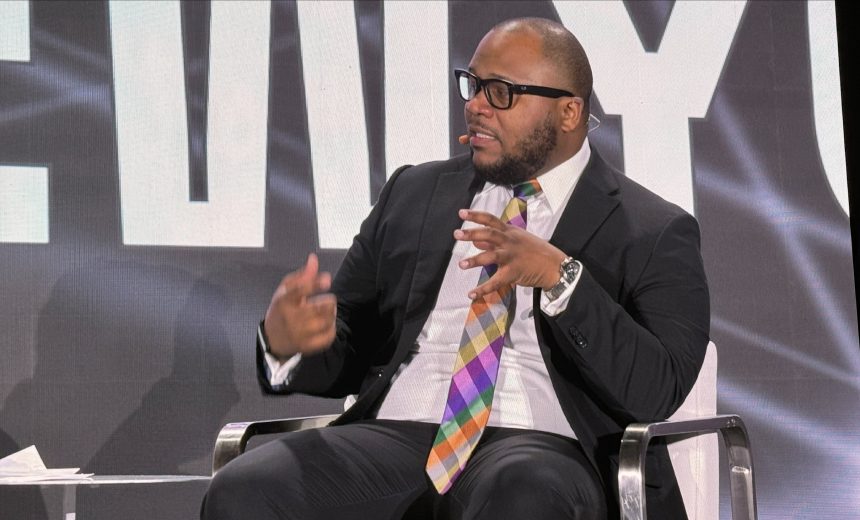
As New York City prepares for a change in leadership come January 1, the current Chief Technology Officer, Matthew Fraser, reassured stakeholders at The AI Summit in Manhattan that the city’s established AI Action Plan provides a stable foundation for future technological innovation. While the specifics of incoming Mayor Zohran Mamdani’s plans for AI remain unclear, Fraser emphasized the resilience ingrained in the existing framework designed to navigate potential shifts in leadership and regulation.
The 2023 AI Action Plan was developed through collaboration across industry, government, and academia, positioning it as a comprehensive guide for sustainable technology investments and decision-making. Fraser noted, “We have conducted significant foundational work to ensure readiness for whatever lies ahead.” Essential to this effort is the protection and compliance of data, alongside institutional safeguards designed to maintain a balance between cautiousness and innovation.
New York City’s extensive technological landscape and its varied services often mirror those found within federal agencies, marking its commitment to investing in AI solutions. Fraser highlighted the application of AI tools within public safety, infrastructure, and health departments; a notable example being the police department’s utilization of AI for crime pattern recognition, which informs strategic officer deployment to counteract illegal activities.
Addressing the intricate relationship between regulation and innovation, Fraser explained the necessity of a measured approach. Excessive regulatory measures could undermine public service goals and yield unintended blind spots, complicating effective governance. He pointed out that AI technology significantly enhances the city’s cybersecurity posture, with weekly detection of over 100 billion threats. AI-driven threat detection streamlines this overwhelming volume, allowing analysts to focus on the most critical threats among thousands.
The city’s inaugural venture into generative AI, specifically through the MyCity Chatbot, faced challenges upon its 2024 launch. Designed to assist the public, the chatbot, still in beta, drew criticism for providing misleading information regarding employment rights, illuminating the crucial need for accuracy in AI communications.
Additional implications arose from an AI-powered initiative by Mayor Eric Adams in 2023 that employed synthetic voices for robocalls in multiple languages. Privacy advocates condemned these actions as “deeply Orwellian,” underscoring the importance of sensitivity in AI application within governmental communication.
To combat public skepticism surrounding AI, Fraser collaborates with the city’s chief privacy officer and chief information security officer to actively engage in public discussions, ensuring transparent policies that prioritize data protection. “We prioritize sharing information in advance of changes to gather public feedback,” he noted, reinforcing the city’s commitment to responsible AI governance.
Fraser’s advice to technology and business leaders at the summit centered on focusing on achievable goals rather than hypothetical concerns, while fostering networks of skilled professionals. By aligning with experts in AI, the city can maintain a resilient support system during transitions in leadership, ensuring continuity and strategic focus on collective objectives.