


In a recent report by Orange Cyberdefense, data regarding the ages of individuals involved in cybercrime was scrutinized, prompting commentary from DataBreaches. The analysis, which examined a dataset of 418 arrests and public legal cases, was suggested to potentially underestimate the prevalence of young offenders, especially children and teenagers, as many nations are hesitant to prosecute such individuals. In instances where charges are made, the cases often remain sealed and can be expunged after probation. While Orange Cyberdefense acknowledged the limitations of their dataset, DataBreaches pointed out that this could skew the perceived trajectory of cybercrime through different age groups.
In a related development, a column by Brad Young in Sky News aligns with these observations, highlighting that the average age of individuals referred to the National Crime Agency’s (NCA) Cyber Choices program—targeting emerging cybercriminals—is only 15 years. Alarmingly, referrals include cases as young as seven years old, illustrating a growing trend, particularly among gamers aged 10 to 16. Concurrently, insurance payouts to compromised UK businesses have surged by 230%, marking a significant increase in the stakes of cybercriminal activity.
The report notes that the NCA has seen a year-over-year rise in referrals, with at least 105 cases submitted to the Cyber Choices program this financial year. However, Jonathan Broadbent from the NCA’s National Cyber Crime Unit cautions that this number may not capture the full scale of the threat, particularly highlighting the concerning frequency of cybercrime incidents in schools.
Data reveals that students have been responsible for 57% of insider data breaches within educational institutions between January 2022 and August 2024, emphasizing the urgency for preventative measures.
Young’s report includes testimony from former hackers that reflects insights gathered by DataBreaches during discussions with adolescent hackers. Many of these young individuals have indicated that their journey into cybercrime often begins with gaming and social interaction, leading them into more risky behaviors. Furthermore, it’s noted that a considerable number of these young offenders are either diagnosed on the autism spectrum or self-identify with conditions such as ADHD, establishing a possible link between these experiences and their engagement in cyber activities.
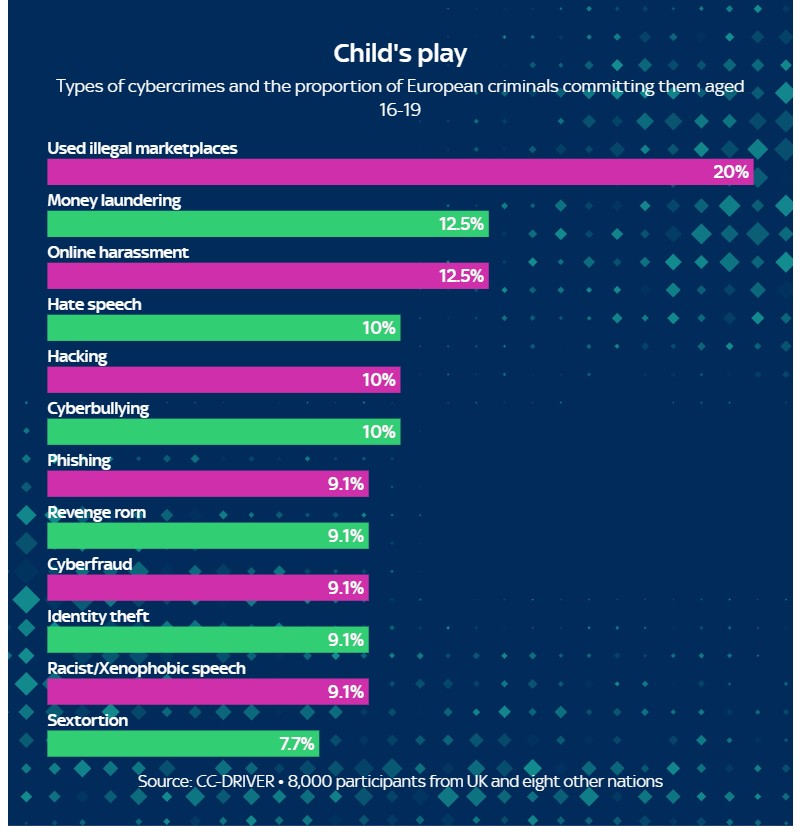
Importantly, the motivations behind these actions appear to be social rather than strictly financial. Despite appearances that money might be a primary driver, peer acceptance and admiration frequently weigh more heavily in their decision-making processes. The report references additional evidence from a CC-Driver analysis, indicating that even individuals aged 16 to 19 are more inclined towards social motivations, with online harassment, hate speech, and cyberbullying reported as frequently as fraud or identity theft.
For further insights, readers can access more from Young’s coverage on Sky News.