


Application Security,
Artificial Intelligence & Machine Learning,
Next-Generation Technologies & Secure Development
AI Revolutionizes Economics Amid Persistent Challenges in Enterprise IT Architecture
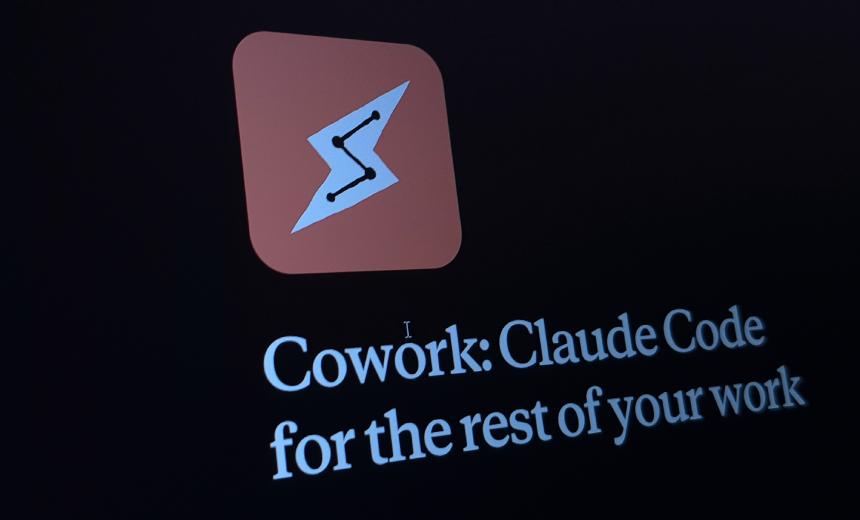
This month saw heightened investor concerns regarding artificial intelligence following Anthropic’s release of its Claude platform, now capable of executing tasks like contract evaluation and policy drafting. This announcement negatively impacted stock values as investors pondered the future viability of traditional software and IT service providers.
Despite this upheaval, Chief Information Officers (CIOs) should reconsider any immediate renegotiation of vendor service-level agreements. While systems like Claude are indeed reducing the costs associated with coding and automating tasks, the notion that AI will render traditional IT roles obsolete appears exaggerated, according to leading industry analysts.
Experts emphasize that enterprises will continue to require robust IT architectures, seamless integration, and human oversight. AI can enhance productivity among existing developer teams, potentially bridging gaps rather than completely displacing skilled professionals.
Legacy Software as a Service (SaaS) vendors, with established reputations for scalability and security, are likely to maintain a competitive edge over newer entities such as Anthropic, which have yet to prove their solutions within the enterprise environment. According to Chris Gardner, a Forrester analyst, although AI is excellent for driving down costs and aiding in prototyping and user-interface automation, it remains unproven for large-scale projects.
AI may successfully generate near-enterprise-class software, yet it is important to recognize that such outputs are primarily prototypes lacking the scalability and security necessary for critical operations. Simple tasks like front-end web development are likely to be the first impacted by AI, while more complex backend integration will still rely heavily on human expertise, especially in enterprises grappling with a host of legacy systems.
AI Integration in Legacy Systems
AI tools have the potential to facilitate the modernization of older applications, especially those built on now-obsolete programming languages. As noted by Teena Piccione, North Carolina’s Chief Information Officer, their use of AI has significantly accelerated the modernization of legacy systems, allowing for the rapid development of prototypes that would otherwise take much longer.
However, AI’s destructive potential cannot be overlooked. While it may streamline certain aspects of software development, the need for experienced developers remains critical. Gardner warns against relying on so-called “vibe coding,” a term that suggests a casual approach to development. Instead, informed “vibe engineering” emphasizes developing within established security and compliance frameworks to ensure the integrity of enterprise applications.
The Role of Developers in an AI-Driven World
The demand for developers with architectural expertise is expected to rise as more narrow coding roles become automated. Industry experts, including those from the National Association of Software and Service Companies, assert that leveraging AI effectively requires human insight into business context and processes, ensuring that value creation remains a priority.
As AI-generated solutions become more prevalent, businesses will increasingly rely on knowledge-intensive professionals who can derive value through system integration and interoperability. As Gardner notes, entities without a clear roadmap for integrating intelligent agents may find themselves at a disadvantage.
So, what does the future hold? IT service firms are expected to adapt and thrive rather than diminish in importance as AI technologies become mainstream. Ashok Soota, chairman of Happiest Minds Technologies, points out that while AI platforms can lower the barrier for software creation, the need for experienced IT services remains crucial for managing complex integrations and governance.
Ultimately, enterprises require a comprehensive understanding of their systems that AI tools alone may not provide. As the technology landscape evolves, those who implement AI thoughtfully, ensuring compliance and leveraging human expertise, will stay ahead in this new era of digital transformation.