


Endpoint Security,
Governance & Risk Management,
Internet of Things Security
Hackers Could Manipulate Settings of At-Home Life 2000 Ventilation System
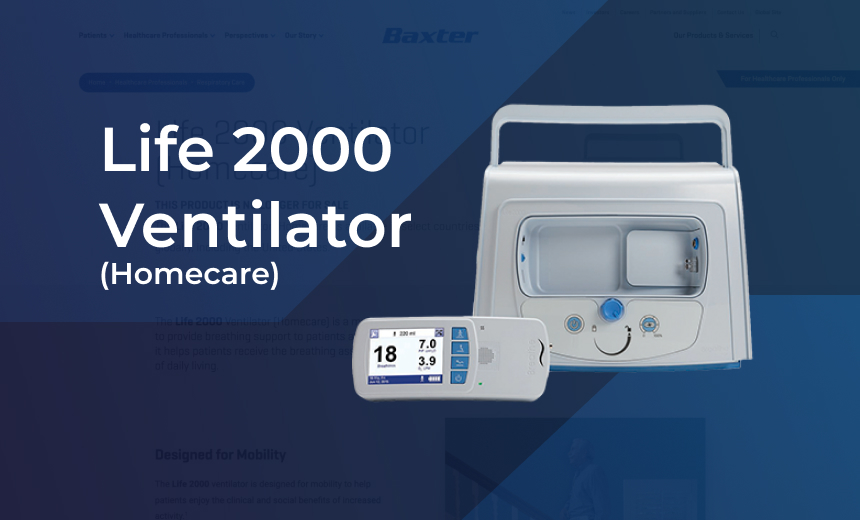
The Food and Drug Administration (FDA) has announced the permanent recall of Baxter’s Life 2000, an at-home ventilation device, due to a cybersecurity issue. This vulnerability enables individuals with physical access to the system to alter its life support settings, posing significant risks to users, including potentially fatal outcomes.
Baxter first informed at-home patients of the unspecified cyber issue back in April, encouraging them to consult with healthcare providers about alternatives. The Life 2000 is marketed as a lightweight, portable ventilator designed to assist patients in their daily activities without the need for a mask.
The FDA’s recent recall alert, issued on November 26, has raised questions about the timing, especially since Baxter began notifying patients earlier in the year. The agency characterized this recall as among the most serious types, cautioning that continued usage of the device could lead to severe injury or death.
Patients have been urged to cease using Life 2000 devices immediately and to consult with their healthcare providers regarding replacement options. The FDA has indicated that if an unauthorized individual gains access to the device, they could modify therapy settings or retrieve device data, which may impair the delivery of necessary breathing support.
Considering the potential for serious adverse health effects—including injuries from device failure or disruption in vital breathing support—the FDA underscores the critical need for immediate vigilance. Although Baxter has not reported any serious injuries linked to this cyber issue as of April, concerns remain regarding the nature of the vulnerability.
This incident follows previous advisories and recalls related to the Life 2000, which had included issues such as a battery charger problem and earlier software vulnerabilities. The company had previously identified multiple cybersecurity weaknesses, including improper authentication controls and missing support for essential security features.
The recent permanent recall suggests that the clawback from voluntary notifications indicates a more urgent threat, highlighting the potential severe implications for patient safety. Phil Englert, a vice president at the Health Information Sharing and Analysis Center, noted the rarity of such FDA alerts concerning cybersecurity vulnerabilities, which usually require a considerable level of concern from the agency.
While Baxter is widely recognized for its proactive approach to securing patient care technologies, the specifics of the current cyber issue remain undisclosed in both the FDA alert and company communications. Adequate information about the nature of the threats involved is essential for healthcare professionals to effectively assess risks within clinical environments.