

Skip to content
Breach Spot
  • The Breach News
  • Check your exposure
REPORT BREACH
Breach SpotBreach Spot
  • The Breach News
  • Check your exposure
REPORT BREACH
Breach SpotBreach Spot

Hackers Target FIDO MFA Using Innovative Phishing Method

  • adminadmin
  • July 19, 2025
  • data-breaches

Cybercrime,
Fraud Management & Cybercrime,
Multi-factor & Risk-based Authentication

PoisonSeed Threat Actor Exploits Cross-Device Login and QR Codes to Deceive Users
Prajeet Nair (@prajeetspeaks) •
July 19, 2025

Hackers Exploit FIDO MFA With Novel Phishing Technique
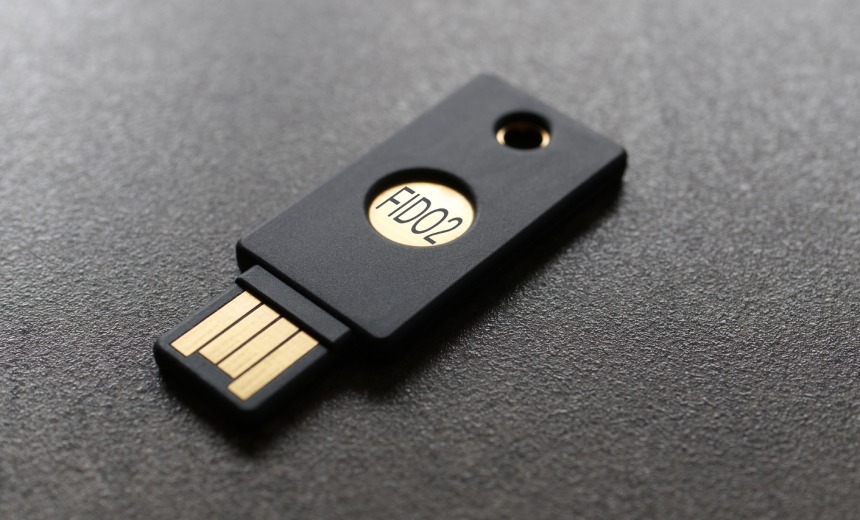
Expel researchers have identified a novel phishing technique that circumvents FIDO2 security, a leading multifactor authentication method. (Image: Shutterstock)

In a notable advancement in cyber threats, Expel researchers have uncovered a sophisticated phishing technique employed by the cybercrime group PoisonSeed. This method specifically targets the FIDO2 physical security keys, which are renowned for offering robust multifactor authentication. The technique utilizes a cross-device sign-in feature along with QR codes to manipulate unsuspecting users.

Despite the integrity of the FIDO protocol itself remaining intact, the attackers have found a way to exploit this feature. According to a detailed report from Expel, PoisonSeed’s phishing campaign adeptly facilitates unauthorized access by convincing victims to engage with a fake login page masquerading as their organization’s Okta portal. Upon entering their credentials, victims inadvertently trigger a chain of events that generates a QR code intended to link their mobile device to the attacker’s session.

The involvement of QR codes adds a deceptive layer of complexity, seducing victims into thinking they are simply completing their normal sign-in procedures. “The hardware and cryptography remain sound, but the convenience features can be manipulated,” stated Jason Soroko, senior fellow at Sectigo.

The architecture of this attack cleverly circumvents the use of FIDO keys, allowing the attackers to execute a phishing email that redirects users to the fraudulent site. After victims enter their login details, the malicious site sends this information to a legitimate authentication service, which then generates a QR code for cross-device login.

As the process unfolds, victims are led to scan the QR code displayed on the phishing site with their mobile authenticator, inadvertently linking it to the attacker-managed session. This facilitates access to sensitive organizational resources without the physical interaction with the legitimate security key.

From a cybersecurity perspective, this incident highlights critical tactics associated with the MITRE ATT&CK framework, notably tactics such as initial access through phishing and techniques for persistence that allow attackers to maintain their foothold within compromised networks. The scenario also underscores the significant role of social engineering in modern cyber threats.

Expel emphasizes that while the attack was swiftly mitigated, it serves as a stark reminder that advanced adversaries can navigate through even the most fortified defenses by employing clever social engineering. Security teams are encouraged to meticulously monitor authentication logs for any anomalies, such as unexpected cross-device sign-in attempts or unfamiliar FIDO key registrations.

Ultimately, although the integrity of FIDO keys remains strong, organizations must remain vigilant and proactive in their security audits. As cybercriminals refine their tactics, understanding potential vulnerabilities in user workflows becomes essential for maintaining robust protection against sophisticated threats.

This incident underscores not only the complexity of modern cyber threats but also the imperative for business owners to continually fortify their cybersecurity strategies against evolving attack vectors.

Source link

Help Prevent Exploitation, Report Breaches

Help to prevent further data unauthorized access or potential exploitation. Protect others by sharing vital breach information. If you’ve discovered a new data breach

REPORT HERE
Trending now

"Fortinet" AI Android Apple artificial intelligence Artificial Intelligence & Machine Learning AT&T AWS CISA Cisco Cloudflare cloud security compliance CrowdStrike cryptocurrency Cybercrime cybersecurity data breach data breaches data privacy data security encryption ESET Facebook FBI Fraud Management GitHub Google healthcare HIPAA Kaspersky machine learning Malware Mandiant Meta Microsoft Multi-Factor Authentication OpenAI Palo Alto Networks phishing ransomware Salesforce Telegram Trend Micro Windows

Sector alert bulletin

Subscribe to your sector-specific insight newsletter to stay updated on potential data breaches and ongoing cyber-attacks targeting your industry

Stay informed and prepared against emerging security threats.

SUSCRIBE NOW

Related Posts

GeoServer Vulnerabilities, PolarEdge, and Gayfemboy: Transforming Cybercrime Beyond Conventional Botnets

August 23, 2025 – IoT Botnet / Cloud Security

Cybersecurity experts are highlighting a series of campaigns exploiting known security flaws and vulnerable Redis servers for various malicious purposes. These actions include leveraging compromised devices as IoT botnets, residential proxies, or cryptocurrency mining resources. One notable attack targets CVE-2024-36401 (CVSS score: 9.8), a critical remote code execution vulnerability affecting OSGeo GeoServer GeoTools, which has been weaponized in cyber attacks since late last year. Researchers from Palo Alto Networks Unit 42—Zhibin Zhang, Yiheng An, Chao Lei, and Haozhe Zhang—reported, “Criminals have exploited this vulnerability to deploy legitimate software development kits (SDKs) or modified applications, generating passive income through network sharing or residential proxies.” This approach to passive income generation is particularly subtle, resembling monetization strategies employed by legitimate app developers.

  • April 23, 2026

Unraveling the Failures of SIEM Rules: Key Lessons from 160 Million Attack Simulations

In the ever-evolving landscape of network security, Security Information and Event Management (SIEM) systems are crucial for identifying and responding to suspicious activity. However, the latest Picus Blue Report 2025, which analyzed over 160 million real-world attack simulations, reveals a startling truth: organizations are detecting only 1 in 7 simulated attacks. This significant shortfall highlights a crucial vulnerability in threat detection and response strategies. Despite substantial investments in security measures, many organizations remain unaware of the threats infiltrating their networks, leaving sensitive systems exposed to compromise. This gap not only undermines defensive efforts but also fosters a deceptive sense of security as attackers gain access, escalate privileges, and exfiltrate valuable data. So, why do these systems continue to fall short despite ongoing investments and attention?

  • April 22, 2026

⚡ Weekly Update: Vulnerabilities in Password Managers, Apple 0-Day Exploit, Concealed AI Prompts, Real-World Attacks & More

📅 August 25, 2025

Cybersecurity Insights / Hacking

In today’s fast-paced cybersecurity landscape, developments can shift the balance of power in global supply chains and influence strategic decisions. Effective defense transcends firewalls and patches—it’s about understanding how cyber threats intertwine with business dynamics, trust, and authority. This week’s highlights demonstrate how technical vulnerabilities translate into critical issues and underscore the importance of security decisions that extend beyond mere IT considerations.

⚡ Threat of the Week
Explore the Risks: Popular Password Managers Targeted by Clickjacking – Major password manager browser extensions have been identified as vulnerable to clickjacking attacks. This security flaw can potentially lead to the theft of sensitive information, including account credentials, two-factor authentication (2FA) codes, and credit card details, under specific circumstances. This tactic, known as Document Object Model (DOM)-based extension clickjacking, has raised alarms among security experts.

  • April 22, 2026

Phishing Scheme Exploits UpCrypter in Fake Voicemail Emails to Deploy RAT Payloads

Aug 25, 2025
Malware / Cloud Security

Cybersecurity experts have identified a new phishing scheme utilizing deceptive voicemail and purchase order emails to distribute a malware loader named UpCrypter. According to Fortinet FortiGuard Labs researcher Cara Lin, the campaign employs “carefully crafted emails to deliver malicious URLs linked to convincing phishing pages.” These pages are designed to lure recipients into downloading JavaScript files that serve as droppers for UpCrypter. Since early August 2025, the attacks have predominantly targeted sectors such as manufacturing, technology, healthcare, construction, and retail/hospitality worldwide. Significant infections have been recorded in countries including Austria, Belarus, Canada, Egypt, India, and Pakistan. UpCrypter acts as a conduit for various remote access tools (RATs), including PureHVNC RAT, DCRat (also known as DarkCrystal RAT), and Babylon RAT, allowing attackers to gain complete control over compromised systems.

  • April 22, 2026

Real-time data breach monitoring by scanning public databases, criminal forums, and online markets to detect exposed credentials and sensitive data.

Industries
  • Enterprise Security Teams
  • Financial Services
  • Retail and E-commerce
  • Legal Services
  • Law Enforcement
Commonly Used For
  • Penetration Testing
  • M&A Risk Research
  • Vulnerability Assessment
  • Red Team Operation
  • Enterprise Security
Contact Us

Need help or have a question?

Email: info@breachspot.com
Phone: +1 (914) 2943243

Copyright © 2026 - Breachspot, Security Breaches Spotted