


Agentic AI,
Artificial Intelligence & Machine Learning,
Governance & Risk Management
Israeli Startup Novee Launches Custom AI Agents to Enhance Cybersecurity Detection
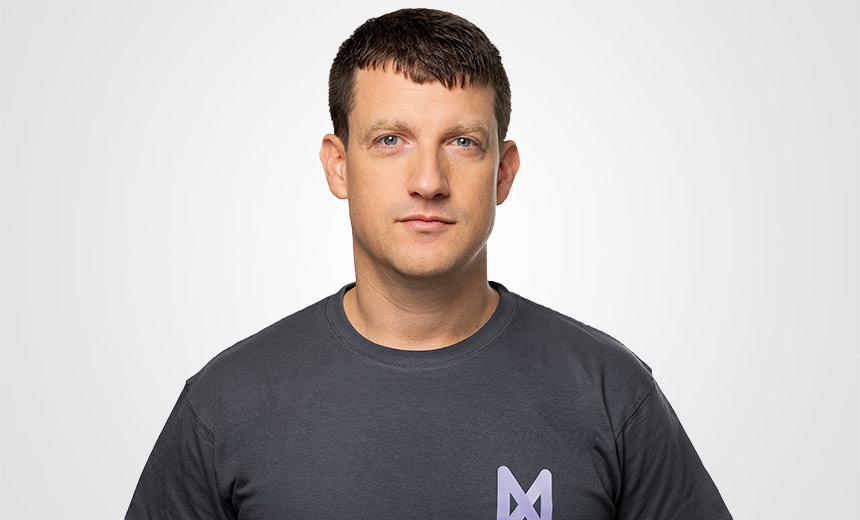
Novee, an Israeli startup founded by former Orca Security executive Ido Geffen, has emerged from stealth mode with a significant funding round of $51.5 million, aimed at advancing its AI-driven offensive security platform. The company’s innovative approach leverages artificial intelligence to enhance the detection and remediation of cybersecurity vulnerabilities.
This Series A funding will enable Novee to attract top-tier talent in AI and cybersecurity and to refine its proprietary AI models. Geffen noted that the design of Novee’s platform mimics the training methods of professional penetration testers, utilizing a combination of tools, techniques, and real-world scenarios to enable its AI agents to autonomously identify and mitigate security vulnerabilities.
Despite being in stealth mode, Novee has managed to secure a customer base of several dozen. Geffen expressed confidence in the technology but emphasized the need to scale rapidly to increase customer acquisition and enhance their market presence. Founded in April 2025, Novee secured seed and Series A funding from investment firms including YL Ventures and Canaan Partners, alongside contributions from Oren Zeev of Zeev Ventures.
Understanding Novee’s AI-Powered Approach
Geffen highlighted the challenges associated with developing specialized AI models for cybersecurity, pointing to the high costs of recruiting PhDs and engineers skilled in AI development. Novee is committed to training its own dedicated AI model, differentiating itself from generic solutions like ChatGPT by focusing specifically on cybersecurity applications.
As Novee advances its AI-based platform, it is becoming increasingly capable of detecting novel software vulnerabilities effectively. Geffen indicated that with its technology, the company is prepared to address the urgency faced by enterprises in identifying vulnerabilities that arise from AI-enhanced development processes.
Geffen reiterated the necessity for organizations to protect themselves against sophisticated AI-driven attacks, stating that adversaries are increasingly leveraging AI to execute faster and more intricate cyber-attacks. Novee’s architecture is designed to gather detailed context about environments, enabling tailored remediation strategies based on specific technological stacks.
Importance of Human Oversight
While Novee’s AI agents are adept at mapping applications and flagging vulnerabilities, Geffen acknowledged the essential role of human practitioners in providing context and prioritization. Human assessment is critical in identifying sensitive data areas and business-critical functions that require immediate attention.
According to Geffen, fostering collaboration between AI agents and human experts enhances the overall effectiveness of Novee’s approach. The AI is trained using descriptive prompts based on expert techniques; however, it benefits from human feedback to improve its accuracy in recognizing vulnerabilities that it initially overlooks.
Traditional vulnerability scanners often rely on predefined patterns and known exploits, which limits their effectiveness against novel threats. In contrast, Novee aims to not only replace conventional penetration testing but also enhance various scanning tools through its AI capabilities. Geffen remarked that as organizations shift towards protecting against increasingly sophisticated attacks, AI-driven solutions are becoming essential for effective cybersecurity measures.